
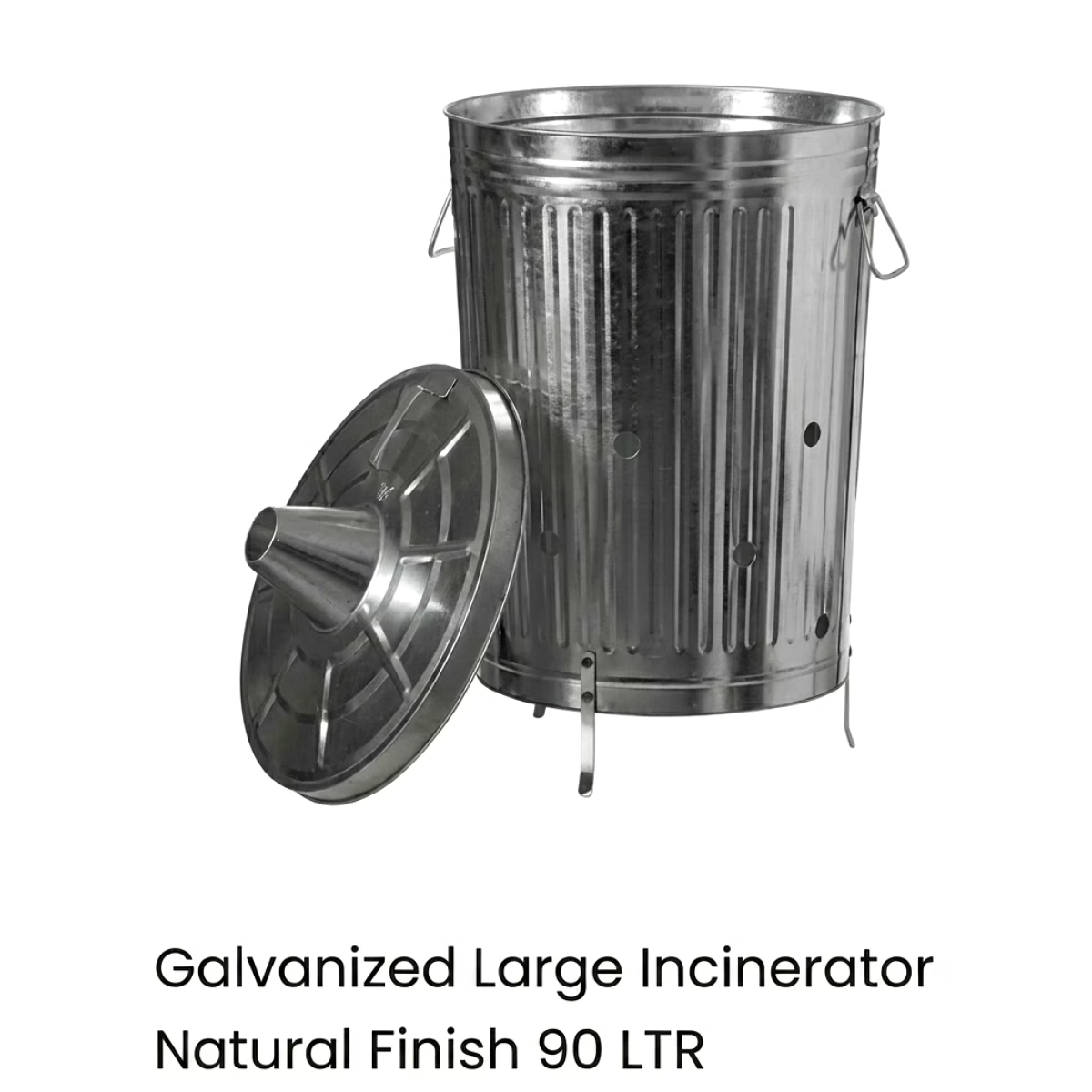


Incinerator
-
Product is not available
Brand:
Country Of Origin : India
Compact Incinerator Unit for Institutional Use
Compact incinerator units provide controlled on-site combustion for specific non-hazardous waste streams in institutional settings. They are used where localized disposal is preferred and where regulatory controls permit on-site incineration. Procurement should prioritize combustion efficiency, emissions control options, and safe handling features to align with local waste-management rules.
Typical compact units are designed for low-volume throughput and include features for secure loading, ash collection, and basic emission control. Buyer evaluation focuses on throughput capacity, fuel type, maintenance access, and safe ash handling. For bulk procurement, confirm supplier documentation on safe operation and service support.
Where regulatory compliance is required, include environmental checks during sourcing and request demonstration or specification evidence from suppliers.
Compact Incinerator — Technical Overview and Procurement Guidance
Compact incinerators are engineered for controlled combustion of permitted waste types at the point of generation. Core technical considerations include combustion chamber design, air flow management, ash handling, and any integrated emissions controls. These units are sized for low-to-moderate throughput and emphasize operator safety and maintainability.
Technical Attributes
- Construction: steel body with access hatch and ash collection tray for safe removal.
- Combustion: chamber geometry and airflow support stable combustion and efficient fuel use.
- Maintenance: accessible panels for ash removal and inspection to reduce downtime.
- Packaging & Transport: palletized crates for safe overseas or domestic transit; coordinate handling requirements with supplier.
Applications
Institutional waste programs: onsite disposal of permitted non-hazardous residues. Constraint: regulatory oversight may apply. Outcome: reduced onsite waste accumulation when managed in compliance with local rules.
Remote site operations: temporary units for isolated camps or fieldwork. Constraint: fuel provision and maintenance capability. Outcome: localized waste management without reliance on remote disposal sites.
Controlled research facilities: disposal of defined non-hazardous materials. Constraint: documentation and handling protocols. Outcome: predictable disposal workflow integrated with facility procedures.
Procurement Checklist
Confirm permitted waste types, unit throughput, service access, and any emissions control options. Request operational documentation and maintenance plans from suppliers before purchase.
Frequently Asked Questions
- What bulk supply formats exist? Units are shipped palletized or crated; volume orders can be arranged with supplier logistics plans.
- How is pricing structured for institutional purchases? Pricing typically considers equipment specification, warranty, and service agreements for repeat procurement.
- What compliance evidence should be requested? Request operational specifications and service plans; confirm local regulatory acceptance before deployment.
- How is the unit prepared for dispatch? Units are secured in crates with protective packing to prevent damage to combustion chambers and controls.